
Custom E-commerce, Website & Web Application Development
Optimize your business with advanced web solutions. Strengthen your online presence with our expert support.


E-commerce websites
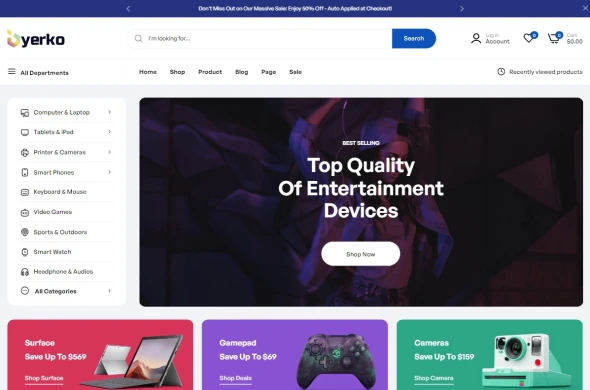
E-commerce website development
Development of fast, high-quality, and custom-made E-commerce websites with ERP integration options. Our online stores are user-friendly and marketing-oriented, designed for both B2C and B2B sales.
- Optimized speed
- Unique design
- ERP integration
- Advanced custom solutions
Websites
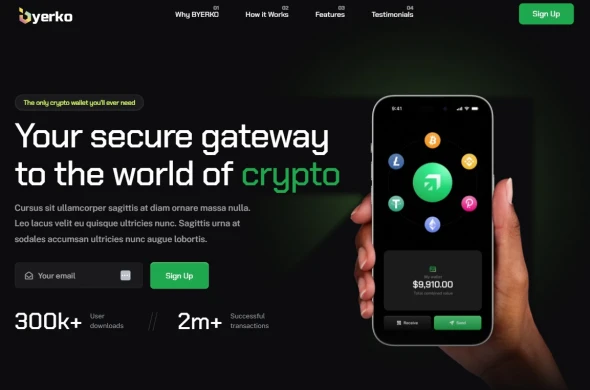
Website development
Development of fast and modernly designed websites, from simple to complex solutions, with easy content management, allowing you to update and adjust your content effortlessly.
- Fast performance
- Unique design
- Easy-to-use editor
- SEO optimization
Web applications
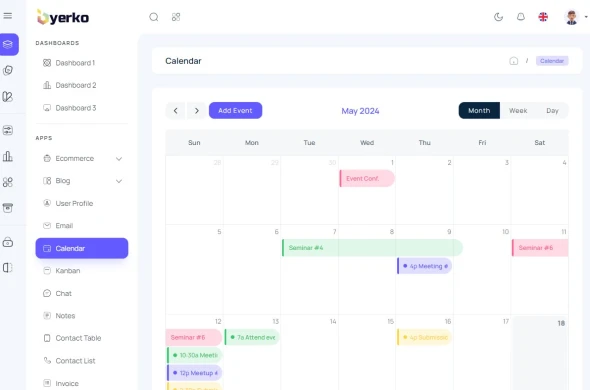
Web application development
Development of powerful, custom-built web applications designed to streamline your employees' workload and impress your users. Our web applications are secure, reliable, and deliver an excellent user experience.
- Custom development
- API integration
- Data security
- Regular maintenance
Platforms and integrations
Option for integration with external platforms
Whether it’s ERP integrations, email platforms, payment systems, or any other external platforms – there are no limits when connecting them to your website, online store, or application.







Support and consulting
Excellent support and consulting after project completion
After the project is completed, you won’t be left on your own. We stand by your side, providing help and expert consulting. We offer various support services to ease your workload and ensure your website runs flawlessly and remains competitive.
Want to know more
Frequently Asked Questions
We answer the most frequently asked questions about website, online store, and web application development.
1. What is a website?
Website is a software solution accessible via the internet. It displays information, images, videos, and other types of content. Users access a website through a web browser and a specific web address. The purpose of a website can be to inform customers, present products and services, enable online shopping, strengthen brand awareness, and facilitate communication with clients. Websites are designed to be user-friendly, allowing quick access to information and easy interaction with visitors.
2. Why does my business need a website?
Your business needs a website for several key reasons:
- Visibility and accessibility: A website allows potential customers to find your business anytime and anywhere. This increases your market presence and brand recognition.
- Credibility: A professional website builds trust and gives your business a reliable image. Many people expect a serious company to have a website where they can get detailed information.
- Information: A website makes it easy to share details about your products, services, pricing, contact information, and opening hours, providing quick answers to customer questions.
- Marketing: With a website, you can reach a wider audience and use various digital marketing strategies, such as **SEO (search engine optimization)**, content marketing, and social media advertising.
- Competition: If your competitors have websites and you don’t, you’re falling behind. Staying competitive means being present where your potential customers are searching.
- Customer connection: A website enables easy communication through contact forms and support services. You can also collect feedback and build stronger relationships with visitors.
- Time and cost savings: A website can automate many tasks, such as answering FAQs, processing orders, or managing bookings, saving time and operational costs.
- Access to analytics: With analytical tools, you can track visitor behavior, understand their needs, and adjust your offer accordingly.
Having a website is essential for any business aiming to grow and stay competitive in today’s digital marketplace.
3. How much does it cost to build a website?
The price for developing a simple website starts at 1499 €, while more complex websites with advanced functionalities, such as fully custom websites or tailored systems can cost several thousand euros more. The final price depends on the project scope, client requirements, and the technologies and services used, such as search engine optimization (SEO) and website maintenance. For an accurate estimate, please send us an inquiry so we can prepare a customized offer based on your requirements, which we will discuss in detail during a meeting.
4. What are the other costs associated with having a website?
After the website launch, the only mandatory additional costs are the annual domain renewal and yearly web hosting, which are required to keep your website visible online. There are no other obligatory additional costs. However, we also offer various maintenance packages for upgrades and updates if needed. These optional services are important to consider when planning your website budget, as they ensure smooth performance and the security of your website.
5. How does the payment for a website work?
According to our business policy, 50% of the package price is paid upfront after the quote is approved and the contract is signed. The remaining 50% is paid once the project is completed, approved on your side, and the website is published and visible to users. For more expensive website or e-commerce packages, we also offer the option of 3 or 4-month installment payments, making it easier to manage your budget.
6. How long does it take to build a website?
The time required to build a website depends on the complexity of the project. A simple website can take 2 to 4 weeks to complete, while more complex websites with advanced features may take 2 to 6 months or longer. Several factors influence the development timeline, including the amount of content, the number of revisions, the client’s response time, and the coordination of different project phases such as planning, design, development, and testing.
7. Why should you trust a professional with building your website?
Working with web professionals to build your website offers many advantages. They provide expert knowledge, customized solutions, and a comprehensive approach, saving you time and ensuring high-quality design. Professionals take care of SEO optimization, technical support, and the use of advanced tools and technologies. This allows you to focus on your business while experts deliver a professional, secure, and user-friendly website that improves your competitiveness in the market.
8. Will we be able to edit the website content ourselves?
Yes, you will be able to edit the content on your website yourself. We use user-friendly content management systems (CMS) that allow you to easily add, edit, and delete content without any technical knowledge. In addition, we provide training and support, so you can confidently manage and update your website content whenever needed.
1. What is an E-commerce website?
An E-commerce website is a software solution accessible via the internet. It enables the sale of products and services and displays information, images, prices, and descriptions of products. Users access the online store through a web browser and web address. The purpose of an E-commerce website is to facilitate online shopping, showcase products and services, strengthen the brand, and communicate with customers. E-commerce websites are designed to be user-friendly, allowing fast and secure purchases and enabling interaction with users online.
2. Why does my business need an E-commerce website?
Your business needs an E-commerce website for several key reasons:
- Broader reach: An E-commerce website allows you to reach customers worldwide, regardless of their location. This expands your potential customer base and enables international growth without the need for physical stores.
- 24/7 availability: Your online store is open 24 hours a day, 7 days a week. Customers can shop anytime, increasing sales opportunities and offering greater flexibility.
- Lower operating costs: Managing an online store is often less expensive than running a physical store. You save on rent, staff, maintenance, and other operational expenses.
- Improved brand recognition: An E-commerce website increases your brand visibility. With proper search engine optimization (SEO) and marketing strategies, you can attract more visitors and enhance your presence.
- Greater competitiveness: Many of your competitors already have online stores. To stay competitive, it is important to offer the same convenience and accessibility they provide.
- Easy inventory management: Modern E-commerce platforms include inventory management systems that give you better oversight of stock levels and automate ordering and restocking.
- Analytics and insights: E-commerce websites provide detailed insights into customer behavior through analytics tools. You can track which products are most popular, where your visitors come from, and how they interact with your site, enabling you to improve your offerings and marketing strategies.
- Increased sales: An online store offers additional sales channels such as product recommendations, promotions, discounts, and loyalty programs, all of which can boost overall sales.
- Flexibility and scalability: An E-commerce website can easily adapt to your business growth. You can add new products, expand to new markets, and introduce new features without major infrastructure changes.
With an E-commerce website, you can increase your reach, efficiency, and competitiveness while improving customer satisfaction.
3. What is the cost of developing an E-commerce website?
The cost of developing an E-commerce website depends on the complexity of the project. A basic E-commerce website starts at 2999 €, while more complex websites with advanced features—such as integration with external systems, customized payment and delivery solutions, and specific design requirements—can cost several thousand euros more. The final price depends on the project scope, client requirements, and the technologies and services used, such as search engine optimization (SEO) and ongoing maintenance. For an accurate estimate, send us an inquiry so we can prepare a tailored quote based on your requirements, which will be discussed in detail during a consultation meeting.
4. What other costs are associated with running an E-commerce website?
After launching an E-commerce website, the additional mandatory costs include the annual domain renewal and yearly hosting of the server where the store is hosted. These are essential yearly expenses to keep your online store visible on the internet. There are no other obligatory additional costs. However, we also offer various maintenance packages for upgrades and updates if needed. It is important to consider these costs when planning your budget, as they ensure the smooth operation and security of your E-commerce website.
5. How does payment for an E-commerce website work?
According to our business policy, 50% of the package price is paid upfront after the offer is approved and the contract is signed. The remaining 50% is paid once the project is completed, approved by you, and the E-commerce website is published and visible to users. For higher-value E-commerce packages, we offer the option to pay in 3 or 4 monthly installments.
6. How long does it take to develop an E-commerce website?
The time required to develop an E-commerce website depends on the complexity of the project. A simple E-commerce website can take 4 to 6 weeks to complete, while more complex websites with advanced functionalities can take 2 to 4 months or longer. The timeline is also influenced by the amount of content, the number of products, the number of revisions, the client’s responsiveness, and the coordination of different project phases, including planning, design, development, and testing.
7. How quickly do you respond to questions or potential issues?
We aim to respond to your questions and resolve any issues as quickly as possible. For the fastest response, please email us at support@byerko.com. You will usually receive an answer within 24 hours on business days, and for urgent cases even sooner. Please provide a clear description of your questions or issues so we can assist you as effectively as possible.
8. Can you help with migrating an existing store to a new platform?
Yes, we can help you migrate your existing store to a new platform. The process includes:
- Analysis of the existing store: We review your current store and its structure.
- Choosing a new platform: Together, we select the most suitable platform for your needs.
- Migration plan: Exporting products, categories, customers, and orders.
Our goal is to ensure a smooth transition to the new platform so you can focus on running your business.
1. What is a web application?
A web application is a software solution that runs on a web server and is accessible through a web browser. Unlike desktop applications, which require installation on a local computer, web applications operate on remote servers. Users access these applications via the internet, eliminating the need for local installation or software maintenance.
Examples of web applications: B2B portals, intranet portals, online course platforms, business applications, API solutions, AI applications
2. What is the difference between a website and a web application?
A website and a web application differ mainly in their purpose and level of interactivity. A website is designed to display information such as text, images, and videos. It serves as an information source for visitors, whereas a web application offers interactive features that allow users to perform tasks such as placing orders or editing content. Imagine the difference between a car dealer’s website and a car purchase web application:
- The car dealer’s website displays information about different car models, including specifications, images, and prices. Visitors can browse this information, but their interaction is limited to viewing the offer and possibly filling out an inquiry form.
- The car purchase web application, on the other hand, allows users to customize their experience. Users can search for cars based on specific criteria, compare different models, configure selected cars with custom options (color, additional equipment), check financing options, book test drives, and even submit an offer or complete a purchase directly through the application. A website is primarily informational, while a web application provides interactive options for customization and purchasing, offering users a more personalized and immersive experience.
3. Why does my business need a web application?
Your business needs a web application for the following reasons:
- Accessibility: Provides customers with 24/7 access to your services, increasing availability.
- Improved user experience: Offers personalized and interactive features that enhance user satisfaction.
- Increased efficiency: Automates business processes, reducing manual work and boosting productivity.
- Data collection: Helps gather valuable data to improve products and support targeted marketing.
- Competitive advantage: Gives you an edge over competitors in many industries.
- Scalability: Easy upgrades and customization allow your business to grow.
- Integration: Simplifies operations by integrating with other systems and APIs.
- Better customer communication: Facilitates communication, leading to higher customer satisfaction.
4. What is the cost of developing a web application?
The cost of a web application depends on the specific requirements of each project. Since every project is unique, different functionalities, technologies, and customized solutions are required. Costs usually range from a few thousand to several hundred thousand euros, depending on the complexity and scope of the project. For an accurate estimate, send us an inquiry so we can prepare a tailored offer based on your requirements, which we will discuss in detail during a consultation meeting.
5. How long does it take to develop a web application?
The development time of a web application can vary significantly depending on the project’s complexity, the scope of functionalities, and the technologies that need to be implemented. Simple applications can take from a few weeks to a few months, while more complex projects with extensive functionalities can take from six months to a year or even longer.
6. Which technologies are best for developing a web application?
The choice of technologies for developing a web application depends on the specific requirements of the project. Different technologies are better suited for certain functionalities, performance needs, and target platforms. For example, dynamic and interactive user interfaces are often built with React, Angular, or Vue.js, while the server-side part of the application can be developed using PHP, Node.js, Django, Ruby on Rails, or ASP.NET, depending on the requirements for speed, scalability, and complexity. After a technical meeting, where we gather all the necessary information and requirements, we select the most suitable technology that best fits your project.
7. How do you ensure the security of data in a web application?
We ensure the security of data in a web application by establishing secure communication, protecting sensitive information, and regularly updating the software. We also implement strict authentication and user authorization procedures, as well as regularly review and improve security measures to prevent potential attacks.
8. How does working with us look like?
We are happy to explain how working with us on your custom website solution looks like. Our process includes the following steps:
- Quote preparation: After receiving your inquiry, we prepare a detailed quote. If we need additional information, we will contact you.
- Meeting arrangement: Once the quote is approved and the deposit is paid, we arrange a meeting – either in person or via video call. During this meeting, we align all project details and present our workflow.
- Planning: We discuss your goals, needs, and expectations. Based on this, we create a plan covering the structure, design, and functionalities of your website.
- Design: We create a unique visual design tailored to your brand and preferences.
- Development: After design approval, we proceed with the development, including coding, testing, and optimization for the best user experience.
- Testing and adjustments: Before the launch, we carry out thorough testing and make any necessary adjustments.
- Launch and maintenance: Once the website is ready, we publish it online. If agreed, we also provide ongoing maintenance and regular updates.
- Handover and training: At the end of the project, we hand over the website and provide a short training session on how to manage and update it.
Our expert team will guide you through the entire website development process. We will communicate with you regularly, provide advice, and keep you updated on progress. Your feedback is important to us, ensuring the final product meets your expectations.
1. What is website maintenance?
Website maintenance is a set of activities and processes that ensure a website operates smoothly, securely, and efficiently. This includes regular software updates, security checks, performing backups, fixing potential errors, adding new content, optimizing loading speed, and making sure the website always meets the latest standards and user requirements. In short, website maintenance ensures that your online presence remains reliable, secure, and attractive to visitors.
2. Why do we need website maintenance?
Website maintenance is essential for anyone who wants to have a serious online presence, whether it’s a personal blog, a portfolio website, a corporate site, or an online store. It ensures security, optimization, updates, and a good user experience, all of which contribute to higher rankings in search engines. Without regular maintenance, a website becomes vulnerable to security breaches, which can lead to data loss.
3. How does the website maintenance process work?
The website maintenance process is carried out in several steps:
- Needs analysis: We review the structure and functionalities of the website and determine the required tasks.
- Maintenance plan: We prepare a plan that includes regular updates, security checks, and optimization.
- Regular updates: We update the CMS, plugins, and themes and install security patches.
- Backups: We regularly create backups to quickly restore the site in case of issues.
- Performance optimization: We improve loading speed and test performance across different devices.
- Content updates: We update and add new content and implement new functionalities.
- Support and reporting: We provide technical support and regularly report on maintenance activities performed.
We continuously keep records of the hours spent and regularly inform each client about the time usage.
4. What is the cost of website maintenance?
The cost of website maintenance varies depending on the scope of work and required services. We offer ready-made maintenance packages with fixed prices, allowing you to choose the one that best suits your needs and budget. We are also always ready to listen to your specific requirements and prepare a customized offer. Contact us for more information.
5. How are maintenance hours billed?
Maintenance hours are billed as follows: the maintenance contract is concluded for one year, which means that all maintenance hours are available to you immediately, regardless of whether you pay monthly or quarterly. For example, if your maintenance contract includes 12 hours, you can use all of them in the first month at no additional cost. Any additional hours used beyond this are billed according to the agreed hourly rate.
6. What happens if I don’t choose a website maintenance service?
If you decide not to choose a website maintenance service, you may face various issues, such as errors or security vulnerabilities. This can lead to data loss, a poor user experience, or even malicious attacks.
7. Is it necessary to maintain and update a website?
Regular website maintenance is not mandatory, but it is crucial for achieving the best results. It helps protect your site from security breaches, ensures you have backups in case of problems, guarantees fast loading times, and provides smooth customer support via phone or email. This is especially important for complex e-commerce websites, where attention to detail can significantly impact business performance and sales.
8. What happens when I use up the additional maintenance hours?
When you use up the additional maintenance hours, all subsequent hours are charged according to the agreed hourly rate. Other activities included in the maintenance contract continue to be performed until the end of the contract period or the start of the new annual billing cycle.
About us
Why is BYERKO the right choice for you?
We specialize in developing online stores, websites, and web applications. Together with you, we create a strategy for your company’s digital presence that best fits your requirements and goals.

Extremely responsive and professional approach. Highly recommended.


Tips and news
Latest posts from the BYERKO blog
On our blog, you can read the latest news and tips about web solutions.
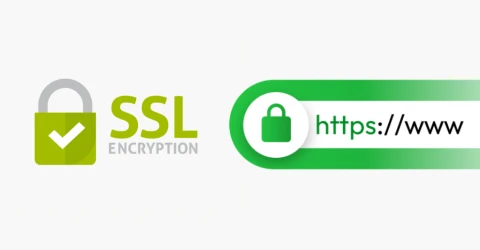
What is an SSL certificate and why do you need it?
An SSL (Secure Sockets Layer) certificate is a digital certificate that ensures secure communication between a...

How much does it cost to build a website?
The cost of a website depends on various factors that should be considered already during the planning phase. Whether...

How much does it cost to build an online store?
The cost of an online store is essentially the price for an entire system working behind the scenes: from product...
Excellent service! Customers can now find us faster, and we receive many more inquiries. Great communication and fast execution - highly recommended!